
If you run a small business that depends on local customers, one thing is clear in 2025 — Local SEO is no longer optional.
Whether you own a restaurant, clinic, salon, repair service, or any location-based business, your success depends on how easily people can find you in local search results.
When someone searches “best plumber near me” or “dentist in New York”, Google shows only a handful of businesses — and those businesses get the calls, leads, and sales.
If your business isn’t showing up there, you’re losing customers every single day.
In this guide, we’ll break down how Local SEO works in 2025, what’s changed, and exactly what small businesses need to do to rank higher in their city.
What Is Local SEO and Why It Matters More in 2025
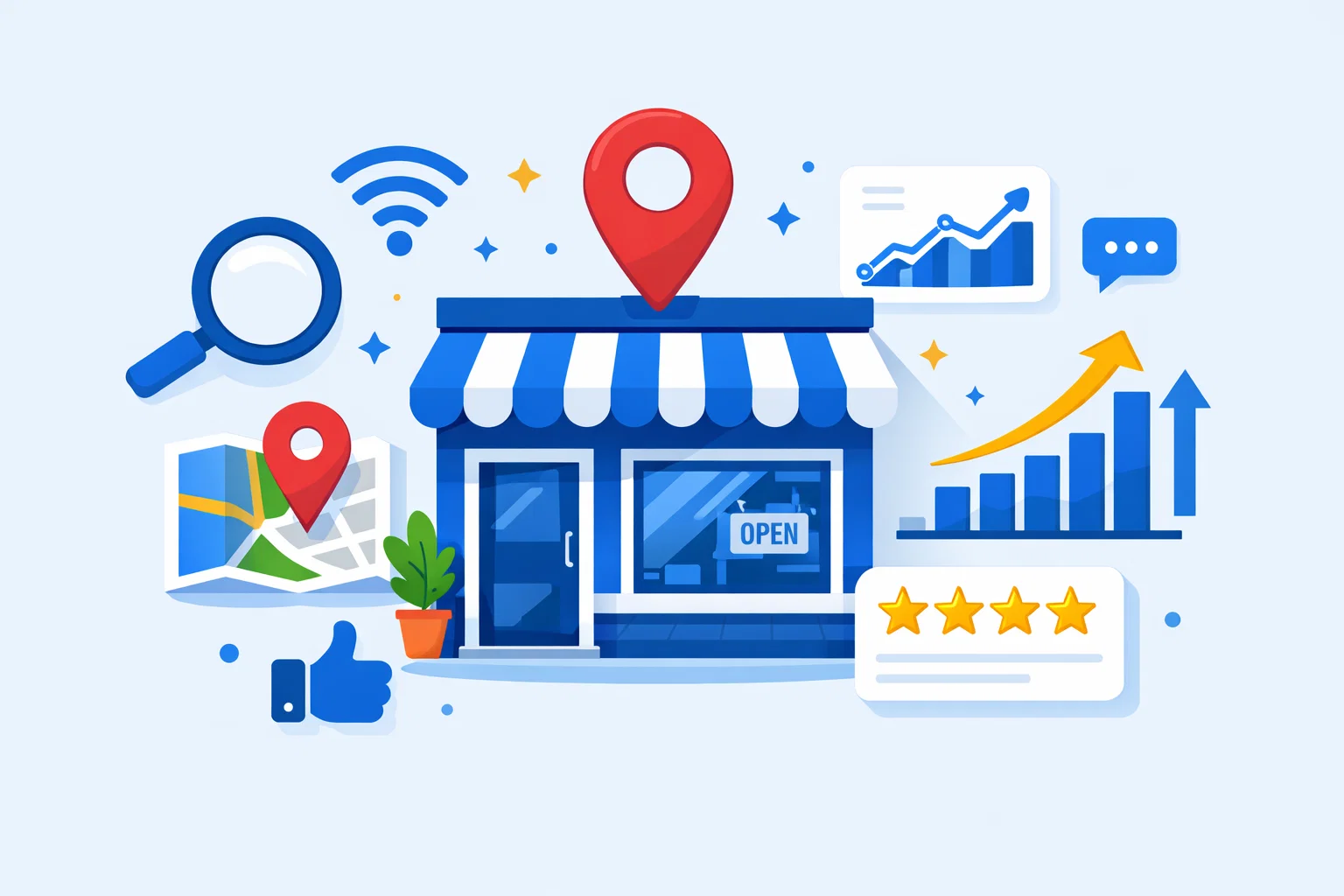
Local SEO is the process of optimizing your online presence so your business appears in location-based searches on Google — especially in:
- Google Maps
- The Local 3-Pack
- “Near me” searches
- City-specific keywords
In 2025, Google has become smarter, more intent-driven, and more focused on real businesses with real trust signals.
That means fake tricks don’t work anymore — but proper local SEO strategies do.
Local SEO helps you:
- Get discovered by nearby customers
- Increase phone calls and store visits
- Build trust through reviews and visibility
- Compete with bigger brands in your area
How Google Decides Local Rankings in 2025
Google mainly looks at three core factors when ranking local businesses:
1. Relevance
How well your business matches the search query.
2. Distance
How close your business is to the searcher’s location.
3. Prominence
How well-known and trusted your business is online.
Your goal is to optimize all three — not just one.
Step 1: Optimize Your Google Business Profile (Most Important)
Your Google Business Profile (GBP) is the foundation of local SEO. In 2025, it plays an even bigger role than your website.
Must-do optimizations:
- Use your exact business name (no keyword stuffing)
- Select the correct primary category
- Add detailed services and products
- Write a keyword-optimized business description
- Upload real photos (store, team, work)
- Post updates weekly
- Enable messaging and calls
A well-optimized Google Business Profile can rank even without a strong website, but together they perform best.
Step 2: Target City-Based Keywords Strategically
Generic keywords like “digital marketing services” are extremely competitive.
Local SEO works when you target geo-specific keywords such as:
- “digital marketing agency in Dallas”
- “local SEO services in Chicago”
- “best marketing agency near me”
Smart keyword tips:
- Add city names naturally (not spammy)
- Create separate service + location pages
- Optimize page titles, H1s, and URLs
- Use “near me” intent keywords organically
This helps Google clearly understand where you operate and who you serve.
Step 3: Create Location-Focused Website Content
In 2025, Google favors businesses that show local relevance through content.
Your website should include:
- Service pages for each main offering
- City-specific landing pages
- FAQs related to your local customers
- Blog posts answering local search queries
Example:
“How Local SEO Helps Small Businesses in Los Angeles”
This type of content builds topical authority and improves rankings.
Step 4: Reviews Are a Ranking Weapon (Not Just Social Proof)
Online reviews directly impact:
- Google Map rankings
- Click-through rates
- Customer trust
- Conversion rates
Review best practices:
- Ask happy customers for reviews
- Respond to every review (positive & negative)
- Use keywords naturally in replies
- Avoid fake or paid reviews
In 2025, quality + consistency matter more than quantity alone.
Step 5: Local Citations & NAP Consistency
Your business name, address, and phone number (NAP) must be consistent across the web.
Important citation platforms:
- Yelp
- Bing Places
- Apple Maps
- Industry-specific directories
Even small inconsistencies can hurt your local rankings.
Step 6: Mobile & Speed Optimization Is Non-Negotiable
Most local searches happen on mobile devices.
Google now prioritizes:
- Fast loading pages
- Mobile-friendly layouts
- Clear call buttons
- Easy navigation
If your site is slow or confusing, users bounce — and rankings drop.
Step 7: Use AI & Automation to Stay Ahead
In 2025, smart businesses use AI-powered tools for:
- Lead follow-ups
- Review requests
- Chatbots
- Analytics and insights
Automation improves response time, customer experience, and conversions — all signals Google loves.
Common Local SEO Mistakes Small Businesses Still Make
- Ignoring Google Business Profile
- Using fake locations
- Keyword stuffing city names
- Not tracking leads
- Expecting instant results
- Not investing in professional help
Local SEO is a process, not a one-time task.
How Long Does Local SEO Take to Show Results?
Realistically:
- Initial improvements: 4–6 weeks
- Strong movement: 2–3 months
- Stable growth: 6+ months
That’s why agencies like DigitallyStar recommend a minimum 3-month strategy, with better results over longer periods.
👉 View pricing plans here: https://digitallystar.com/pricing/
Should You Do Local SEO Yourself or Hire an Agency?
DIY is possible — but it takes time, tools, testing, and experience.
A professional local SEO agency:
- Avoids costly mistakes
- Uses proven frameworks
- Tracks real business results
- Saves your time
- Delivers consistent growth
At DigitallyStar, we create custom local SEO strategies based on your business, city, and competition.
👉 Get a custom quote: https://digitallystar.com/get-a-quote/
👉 Contact us: https://digitallystar.com/contact/
Final Thoughts
In 2025, local SEO is about trust, relevance, experience, and consistency.
Small businesses that invest in the right strategies will dominate their local markets — while others struggle to stay visible.
If you want more calls, leads, and customers from your city, Local SEO is the smartest long-term investment you can make.